
Among the many sacred destinations on the Buddhist Circuit, Kesariya remains one of the most fascinating yet lesser-known sites. Located in Bihar, India, Kesariya is famous for its massive Buddhist stupa, which is considered one of the largest and tallest ancient Buddhist stupas in the world. Although it does not receive as many visitors as Bodh Gaya or Sarnath, its historical and spiritual importance makes it a remarkable destination for pilgrims and history enthusiasts alike.
For travelers exploring the Buddhist Circuit, Kesariya offers a unique opportunity to witness an extraordinary monument connected to the life of Gautama Buddha. Rising prominently above the surrounding landscape, the stupa stands as a lasting symbol of Buddhist heritage and continues to attract visitors who wish to discover a different chapter of Buddha’s journey.
Why Kesariya Is Important in Buddhism
According to Buddhist traditions, Kesariya is associated with one of the final journeys of Gautama Buddha. It is believed that while traveling from Vaishali toward Kushinagar, Buddha stopped in this region and delivered important teachings to his followers. Historical accounts suggest that the people of the area were deeply devoted to Buddha and wished to accompany him on his journey.
Before continuing his travels, Buddha is said to have offered his begging bowl to the people as a symbol of remembrance. This event strengthened the spiritual significance of Kesariya and transformed it into an important place of devotion for future generations of Buddhists.
The Magnificent Kesariya Stupa
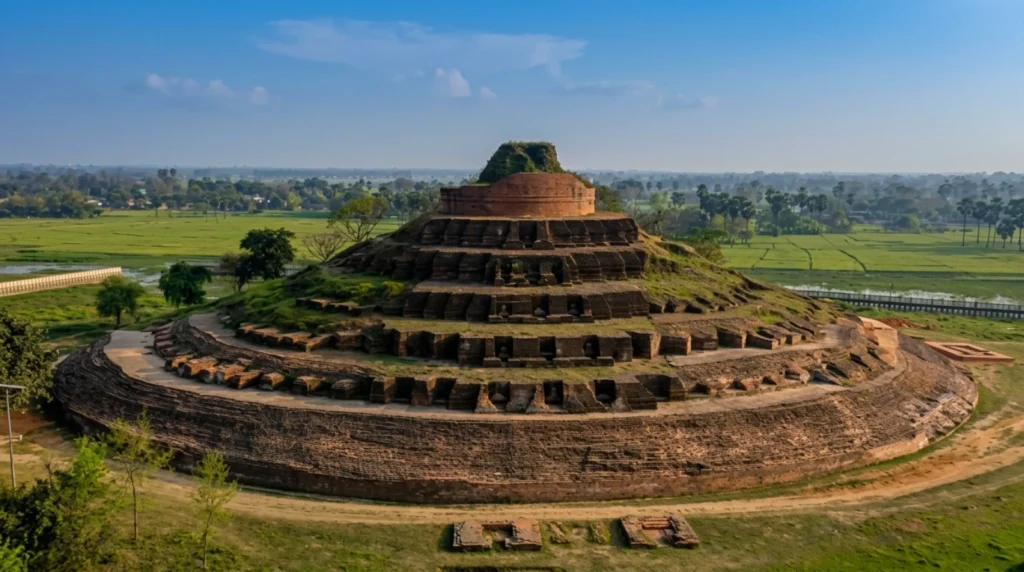
The most famous attraction in Kesariya is the impressive Kesariya Stupa, an enormous brick structure that dominates the landscape. Archaeologists believe the stupa was originally built centuries ago and later expanded by different rulers and Buddhist communities.
Even in its present condition, the monument remains one of the largest Buddhist stupas ever discovered. Its circular terraces, ancient brickwork and massive dimensions reflect the architectural achievements of ancient India. Visitors often find themselves amazed by the sheer scale of the structure and the craftsmanship that has survived for centuries.
Historical and Archaeological Significance
Kesariya is not only a place of religious importance but also an important archaeological site. Excavations have uncovered statues, inscriptions and structural remains that provide valuable insights into the development of Buddhism in eastern India.
Researchers believe the site flourished during periods when Buddhism was widely supported by regional kingdoms and monastic communities. The discoveries made here continue to help historians understand the growth of Buddhist architecture and pilgrimage traditions throughout the region.
A Hidden Gem of the Buddhist Circuit
Unlike some of the more crowded pilgrimage destinations, Kesariya offers a peaceful and relatively untouched experience. Visitors can explore the site at a relaxed pace while appreciating its historical atmosphere and spiritual significance.
Many travelers who visit Kesariya describe it as one of the hidden treasures of the Buddhist Circuit. Its quiet surroundings and monumental architecture create a memorable experience that differs from the larger pilgrimage centers while remaining deeply connected to Buddhist history.
Pilgrims and Visitors Every Year
Although Kesariya receives fewer international visitors than destinations such as Bodh Gaya, Lumbini or Sarnath, it continues to attract Buddhist pilgrims, researchers and heritage enthusiasts from various countries. The site is increasingly gaining recognition among travelers interested in exploring lesser-known Buddhist landmarks.
Many Buddhist Circuit tours now include Kesariya alongside Vaishali, Rajgir, Nalanda and Kushinagar. As awareness of its historical importance grows, the stupa is becoming a valuable addition to Buddhist pilgrimage itineraries across India.
Kesariya and the Buddhist Circuit
Kesariya occupies an important position on the Buddhist Circuit because it is associated with Buddha’s final travels and the devotion of his followers. The site provides visitors with insight into the relationship between Buddha and the communities that supported his teachings during his lifetime.
For travelers seeking a more comprehensive understanding of Buddhist history, Kesariya adds depth to the pilgrimage experience. It connects major destinations such as Vaishali and Kushinagar while showcasing one of the most impressive Buddhist monuments in the world.
For anyone exploring the Buddhist Circuit, Kesariya offers an unforgettable opportunity to discover one of Buddhism’s hidden treasures. Its remarkable stupa, rich heritage and peaceful surroundings make it a destination worthy of every pilgrim’s journey.