
There are some places that leave an impression not because of a single event, but because they quietly preserve centuries of history. Sanchi is one such destination. Perched on a hilltop in the state of Madhya Pradesh, Sanchi is home to some of the finest examples of ancient Buddhist architecture in the world. Unlike Bodh Gaya, Sarnath or Kushinagar, Buddha never visited Sanchi, yet it remains one of the most important Buddhist sites on the planet.
What makes Sanchi truly remarkable is its ability to tell the story of Buddhism through stone, art and architecture. For more than two thousand years, its stupas, gateways and monasteries have stood as silent witnesses to the growth of Buddhist culture. Today, travelers, pilgrims and history enthusiasts from around the world visit Sanchi to explore a site that beautifully preserves the legacy of one of humanity’s greatest spiritual traditions.
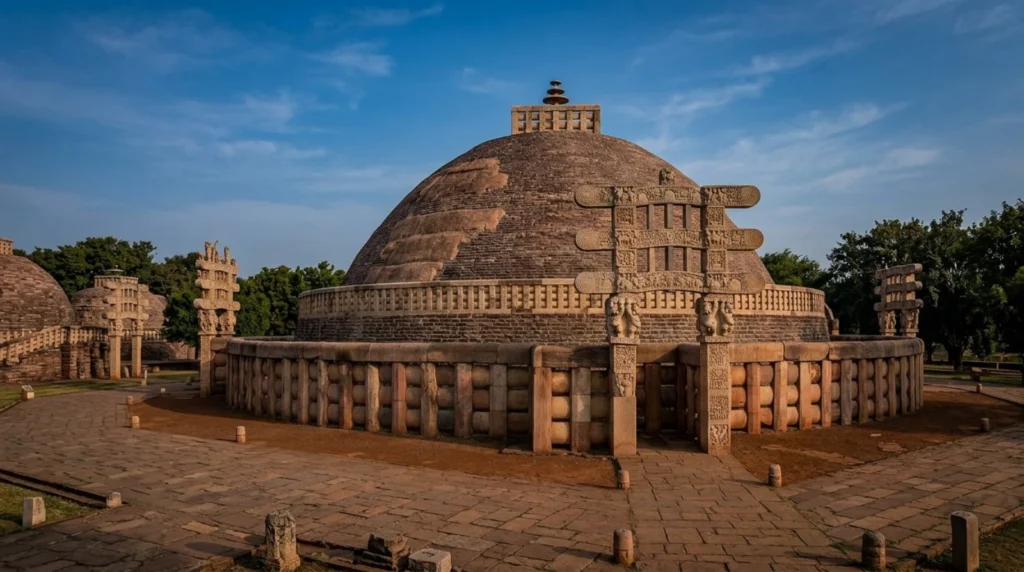
Why Sanchi Is Important in Buddhism
Sanchi occupies a special place in Buddhist history because it became one of the earliest and most significant centers for Buddhist art and architecture. The site flourished under the patronage of Emperor Ashoka, one of the most influential rulers in Indian history. After embracing Buddhism, Ashoka commissioned the construction of several monuments across the Indian subcontinent, and Sanchi became one of his most celebrated projects.
Although Buddha himself never visited the site, Sanchi played a crucial role in preserving and spreading Buddhist values. The monuments built here became symbols of faith, peace and devotion. Over the centuries, monks, pilgrims and scholars gathered at Sanchi, helping establish it as one of the most respected Buddhist heritage sites in the world.
The Great Stupa of Sanchi
The most famous attraction at Sanchi is the Great Stupa, often regarded as one of the oldest stone structures in India. Originally commissioned by Emperor Ashoka in the 3rd century BCE, the stupa was later expanded and enhanced by subsequent generations.
What makes the Great Stupa extraordinary is not only its size but also its symbolism. The structure represents Buddha’s teachings and the path toward enlightenment. Visitors are often fascinated by the beautifully carved gateways, known as toranas, which depict scenes from Buddhist traditions, daily life and important events connected to Buddhism. These carvings continue to be studied and admired by historians and art lovers alike.
A UNESCO World Heritage Site
Sanchi’s importance extends far beyond India. Recognizing its exceptional cultural and historical value, UNESCO designated the Buddhist Monuments at Sanchi as a World Heritage Site. This recognition has helped preserve the site and introduce its remarkable heritage to a global audience.
Today, Sanchi is considered one of the finest surviving examples of ancient Buddhist architecture. Its stupas, temples, monasteries and pillars provide valuable insight into how Buddhist communities lived, worshipped and expressed their beliefs through art and construction.
Art, Architecture and Spiritual Legacy
One of the most fascinating aspects of Sanchi is the level of artistic detail found throughout the complex. The carved gateways tell stories through intricate sculptures, offering a visual record of Buddhist traditions and ancient Indian culture.
For visitors, Sanchi provides an opportunity to appreciate Buddhism from a different perspective. While many pilgrimage destinations focus on events from Buddha’s life, Sanchi showcases how his teachings inspired generations of artists, architects and devotees. The result is a site that combines spirituality, creativity and history in a truly unique way.
Pilgrims and Visitors Every Year
Sanchi welcomes thousands of visitors from India and abroad each year. While it may not attract the same volume of pilgrims as Bodh Gaya, it remains a highly respected destination among Buddhists, historians and cultural travelers.
Many visitors include Sanchi in broader Buddhist heritage tours, often combining it with destinations such as Bodh Gaya, Sarnath, Nalanda and Rajgir. The peaceful hilltop setting, combined with its extraordinary monuments, creates an experience that is both educational and deeply inspiring.
Sanchi and the Buddhist Circuit
Although Sanchi is geographically separate from many traditional Buddhist Circuit destinations, it remains an important part of India’s Buddhist heritage. The site provides valuable insight into how Buddhism evolved after Buddha’s lifetime and how his teachings influenced art, architecture and society.
For travelers seeking a deeper understanding of Buddhist history, Sanchi offers a perspective that complements the major pilgrimage sites. It reveals how Buddhism grew from a spiritual movement into a cultural force that shaped entire civilizations.
For anyone interested in Buddhism, history or architecture, Sanchi offers an unforgettable journey into the past. It stands as one of India’s greatest treasures and a timeless symbol of peace, wisdom and human creativity.