
Among the most revered destinations in the Buddhist world, Kushinagar occupies a deeply emotional and spiritual place. Located in the Indian state of Uttar Pradesh, this sacred town is known as the place where Gautama Buddha spent his final days and attained Mahaparinirvana.
For Buddhists across the globe, Kushinagar is far more than a historical site. It is a symbol of peace, liberation and the completion of Buddha’s earthly journey.
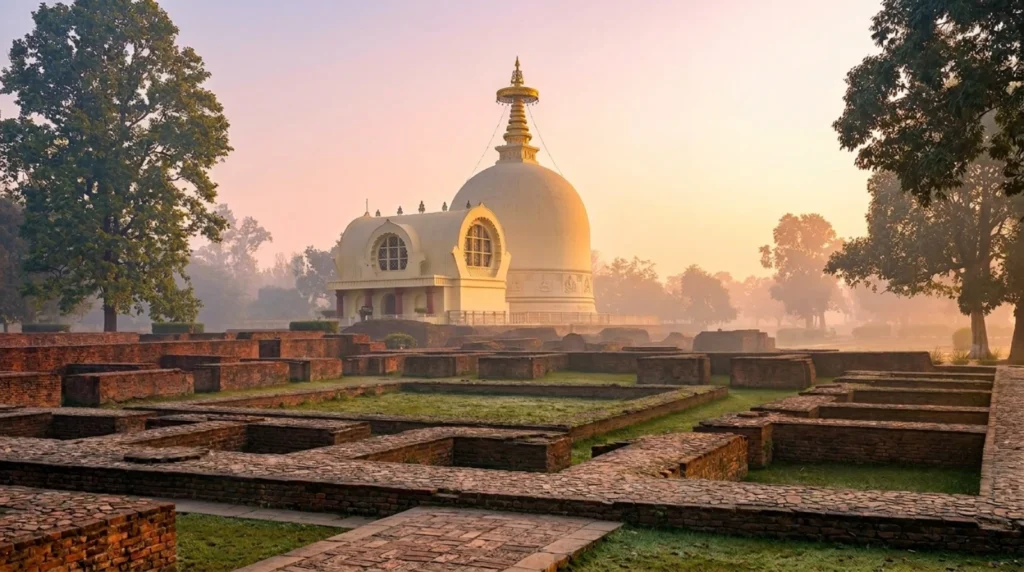
The Final Chapter of Buddha’s Life
After decades of teaching the path of wisdom, compassion and mindfulness, Buddha traveled across northern India guiding countless followers. According to Buddhist traditions, it was in Kushinagar that he delivered his final teachings before passing away at the age of eighty.
Surrounded by his disciples, Buddha entered Mahaparinirvana, a state beyond the cycle of birth, death and rebirth. This event marks one of the most significant moments in Buddhist history and makes Kushinagar one of the four principal pilgrimage sites associated with the life of Buddha.
Why Kushinagar Is So Important
If Lumbini represents Buddha’s birth, Bodh Gaya his enlightenment and Sarnath his first teaching, then Kushinagar represents the peaceful conclusion of his earthly life.
For Buddhists, visiting Kushinagar is an opportunity to reflect on Buddha’s teachings about impermanence, compassion and inner peace. The site serves as a reminder that even the greatest spiritual teacher accepted the natural cycle of life with serenity and wisdom.
Because of this profound significance, pilgrims from countries such as Thailand, Sri Lanka, Japan, Myanmar, Vietnam, South Korea and many others travel to Kushinagar every year.
The Mahaparinirvana Temple
The most famous attraction in Kushinagar is the Mahaparinirvana Temple, which houses a magnificent reclining statue of Buddha.
Carved from sandstone and measuring over six meters in length, the statue depicts Buddha peacefully resting during his final moments before attaining Mahaparinirvana. For many visitors, standing before this serene image becomes one of the most moving experiences of their Buddhist journey. The atmosphere around the temple is remarkably calm, encouraging reflection and meditation.
Ramabhar Stupa
Another important site is the Ramabhar Stupa, believed to mark the location where Buddha’s cremation took place. This ancient monument holds immense historical and spiritual value and remains an essential stop for pilgrims seeking to understand the final chapter of Buddha’s life.
Surrounded by greenery and open landscapes, the stupa offers a peaceful setting for contemplation.
An International Buddhist Destination
Today, Kushinagar is home to numerous monasteries and temples built by Buddhist communities from around the world.
Visitors can explore beautiful monasteries established by Thailand, Japan, China, Myanmar, Sri Lanka and other Buddhist nations. These sites reflect the global influence of Buddha’s teachings and the enduring importance of Kushinagar within the Buddhist world.
Thousands of Pilgrims Every Year
Kushinagar welcomes pilgrims, monks, scholars and travelers from many countries throughout the year. It forms a vital part of the Buddhist Circuit and is commonly visited along with Sarnath, Bodh Gaya, Lumbini, Rajgir and Nalanda. Many travelers consider their Buddhist pilgrimage incomplete without visiting the place where Buddha attained Mahaparinirvana.
The town has also benefited from improved infrastructure, making it increasingly accessible to international visitors.
Other Places to Visit in Kushinagar
Apart from the Mahaparinirvana Temple and Ramabhar Stupa, visitors can explore:
- Matha Kuar Shrine
- Wat Thai Temple
- Japanese Temple
- Chinese Temple
- Burmese Monastery
- Meditation Centers
- Various International Buddhist Monasteries
These attractions add cultural and spiritual depth to every visit.
Kushinagar Today
Modern Kushinagar remains one of the holiest destinations in Buddhism and continues to attract visitors seeking spiritual inspiration and historical understanding.
Its peaceful surroundings, sacred monuments and connection to Buddha’s final journey create an experience unlike any other destination on the Buddhist Circuit.
A visit to Kushinagar is not simply a journey through history. It is a journey into one of the most sacred chapters of Buddhism itself.